Conversation with the Author
Last week, in our post, Poetry Moment: Dear Trees, , we spoke with Susan Glickman about our trade as editors, client work and questioning the bigger picture. We continue our conversation here in Part Two.
Q: From an editorial perspective, what are your thoughts on how the publishing industry can deal with the climate crisis and deforestation?
The biggest change in my lifetime has been the adoption of the digital model for every stage of publishing from submission until the final journal or book is printed. Younger editors may not be aware how much paper we used to waste, but regret for that practice informs my poem, Dear Trees. In addition, most responsible Canadian publishers like my main employer, MQUP, now use acid-free paper that is 100% ancient forest free and 100% post-consumer recycled. And, as Kathleen Fraser of MQUP reminds me, print-on-demand technology means we can tighten print runs even further and reduce shipping emissions by producing exactly the number of copies we need in exactly the right locations.
But, as the poem suggests, an ongoing issue is that there are just too many books coming out. I say this even though I currently have two manuscripts seeking publication and am anxiously praying that they will be accepted! I know that the population has grown (when I started out in publishing, the Canadian population was 23.7 million; today it is 41.5 million) and that more and more people are literate, but sometimes it seems that publishers aren’t stringent enough in their selection criteria. They seem compelled to emulate whatever is popular so they can stay in business. And given how poorly books sell in Canada, who can blame them? So, as with many other issues in life, I can articulate the problem but don’t have a solution.
Q: Having been in this trade for 50 years, what do you make of the new buzzword “AI” in writing and editing?
I began my career editing on paper in accordance with Hart’s Rules and proofreading by comparing proofs to final marked-up texts using a ruler to read from the bottom of the page up. Computers with programs like Word’s “Track Changes” have made my job both more efficient and more environmentally friendly, so I am not against automation on principle.
But when it comes to the use of AI in publishing, I am not a fan. It has already replaced editing in some places and writing in others, and the results are not impressive. Nevertheless, as AI inevitably gets better at both writing and editing, it will become more of a threat not only to our trade but to human culture in general. In my bleakest moments, I envision a dystopian future in which people can no longer distinguish between art, music and literature produced by machines and that made by humans and, furthermore, don’t care about the distinction.
For now, in my other profession as a writer, I am part of a class action suit against Anthropic for using my books, without permission and without payment, to train AI. My other protest is to never use AI myself. In this, as in most aspects of my life — after all, I write poetry — it seems I am in the minority.
Dear Trees
Day after day I parse minute nuances in syntax
and semantics for clients who, too often,
are writing books that contribute negligibly
to the store of human knowledge
or ways we might understand each other
in this fraught and fiery world.
What kind of occupation is this
for a person who wishes to be of service?
Am I employed merely to enhance
other people’s vanity? And what of my own vanity –
fifty years of writing stuff like this
that precious few people read?
Dear trees, I bow my guilty head before you,
less graceful, less essential than you
who deserve much, much better
than this interminable fabrication of words.
What is it, really, that I am doing
with this life I have been lent
and soon will have to give back
like a book to a library, a book
whose cover is worn, paper brittle,
and narrative inconclusive?
___
Previous post from Susan Glickman: Poetry Moment: Dear Trees
The Editors’ Weekly is the official blog of Editors Canada. Contact us.
Discover more from The Editors' Weekly
Subscribe to get the latest posts sent to your email.
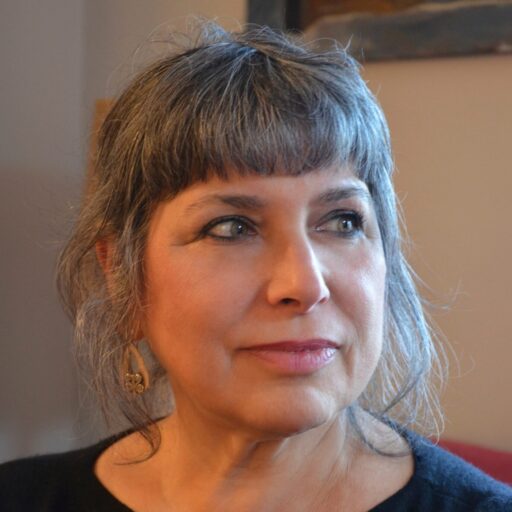
Susan Glickman
Susan Glickman grew up in Montreal and now lives in Toronto, where she works as a freelance editor and is learning to paint. She is the author of eight volumes of poetry, four novels for adults, three novels for children and two works of nonfiction.