
The first publishing company I worked for had an in-house newsletter that included photos from sales meetings, recipes, updates on the company baseball team (the Weasels) and random pieces on diverse topics. One of my contributions was titled something like, “How to impress at cocktail parties.” (Unfortunately, I can’t find the original; I hope the real title was a bit snappier!) I was editing a statistics book at the time, and my article highlighted some of the strange and interesting facts I had learned in spite of not being an expert on any of the relevant topics, including statistics.
The article was intended to be humorous. But over the years, I found that people I met at parties actually were impressed that I edited college and university textbooks. “You must be smart!” they would say. While I didn’t want to disabuse them of that notion, I always modestly explained that in fact my lack of specific subject matter expertise allowed me to be an effective editor.
Query, query, query
My mantra has always been, “If I can’t understand it, neither will an 18-year-old college student.” This approach gives me the courage to question authors who truly are experts in their field — not about the facts but about their presentation. My expertise is in editing, not in the content. I am always careful to explain this, to avoid putting the author on the defensive. Outside educational publishing, a similar awareness of audience should inform your work with experts, whether you edit academic materials or general nonfiction.
Let’s start with organization. Most subject matter experts (SMEs) have day jobs and do their writing in snatches between other commitments. They may put their thoughts down randomly as they come to mind, leaving it to the editor to bring order and propose a clearer structure. In educational publishing, that structure may be determined by a set curriculum or previously agreed-on learning objectives. I sometimes find myself gently explaining that students need a linear progression of topics to support their learning.
In sorting through the pieces, I may find a few that cause me to think, “Hmm, what’s this?” Some SMEs include information that they personally find interesting but that is simply beyond the scope of the current project. It could be too advanced — such as a detailed discussion of the federal budget in an introductory economics text — or tangential to the main topic — such as an extended history of a specific company in a marketing textbook.
Other points to query include missing definitions, obvious gaps in an argument or topic coverage, and examples that seem dated. But don’t overwhelm the author with unnecessary queries; be confident in your own knowledge and editorial skills.
Edit for level and accuracy
A basic copy edit is always a given. A stylistic edit to simplify language for the intended audience may also be needed. I sometimes query specific jargon to be sure I haven’t removed terms that a student needs to learn. But most SMEs do not object to simpler vocabulary, shorter sentences and clear transitions. They also generally accept changes to address inadvertent bias — for example, changing an indeterminate “he” to the singular “they.” However, any significant bias in the content itself or in the overall presentation may require further discussion.
A trickier aspect is ensuring the accuracy of the material. Although I am not typically responsible for fact-checking, certain points may stick out that lead me to query the author or recommend that the publisher conduct a peer review. Errors may arise from simple lack of care or (unfortunately) from failure to properly review content partially generated by AI. Any concern about active disinformation needs to be brought up with the author or publisher.
Learn more
I’m not going to as many cocktail parties as I used to and, therefore, not impressing as many new people. But looking back over 30 years, I’m a bit amazed at what I achieved as an “educated layperson.”
Do you have stories to share or questions to ask about working with subject matter experts? I’d love to hear them! Join me at Editors26, where I’ll be holding a session titled “The Editor and the Expert: A Guide to Successful Teamwork.”
___
The Editors’ Weekly is the official blog of Editors Canada. Contact us.
Discover more from The Editors' Weekly
Subscribe to get the latest posts sent to your email.
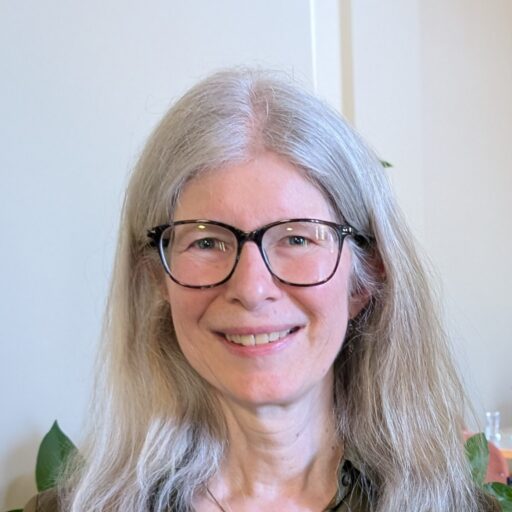
Suzanne Schaan
Suzanne Schaan managed the developmental editors in Pearson Canada's higher education division for many years and then spent several years as the managing editor at AME Learning. She has worked with subject matter experts in a variety of disciplines, some of whom were more intimidating than others. She is currently a freelance editor.