
I’ve been teaching editing and thinking about Editors Canada’s Professional Editorial Standards (PES) for about 10 years. In that time, I’ve thought about neurodivergence from a conscious language perspective (how we edit critically, with care and compassion) and a standards perspective (how we ensure neurodivergent editors are represented).
Earlier this year, I learned that I am neurodivergent — I am autistic and I have attention-deficit/hyperactivity disorder (ADHD). When I mentioned this to someone at the Editors Canada conference in Halifax in May, they said they estimate that “about 30 per cent of editors are neurodivergent.” I’ve always heard people say that editors tend to be introverted and on the shy side. However, who knows how many of us are neurodivergent, given that editorial roles are largely occupied by women, and a good number of women are diagnosed later in life.
In this series, I want to focus on how my experience of neurodivergence intersects with my editing work and PES. In each part, I will discuss particular neurodivergent traits that may or may not be widely reported or documented, as I write from lived experience more than published research. These traits can be exceptionally useful to editors, but they can also be counterproductive. In other words, there are trade-offs.
Justice sensitivity
One experience I have and that is reported by other neurodivergent people is justice sensitivity — a heightened response to perceived unfairness or wrongdoing. This can also manifest as an intense need for truth-telling. As an editor, I work to uphold the integrity of the information I’m editing. This is supported by PES, particularly in sections A7, A8 and A9. This can be as simple as making legal disclaimers front and centre (rather than burying them in unreadable type and incomprehensible language) or as difficult as detecting unconscious biases — including my own — as I edit.
While we want to edit for clarity and factual truth, there are limitations. We must walk a tightrope between editorial responsibilities and legal, institutional and other constraints. This is why I talked briefly about moral distress in my Halifax presentation — it’s knowing what is right but also knowing that you’re not always going to be able to do what is right. Editors, and especially neurodivergent editors, often grapple with this. Nevertheless, editing with an ethical lens is an incredible strength that all editors bring to material they edit.
Word sensitivity
This is not an established term, but it’s the only way I can describe my sensitivity to the visual qualities of language. It extends to word shapes, letterforms and typography. I imagine other neurodivergent editors experience this too. For example, the word fulsome pains me, and the Calibri typeface tries me. These reactions go beyond ordinary icks, and they can be inexplicably intense.
As editors, our editorial changes must have valid justification. This principle is supported by PES. For example, A1.4 advises us to support our editorial choices when asked. Therefore, as a neurodivergent editor, I must manually override these reactions unless a change is justified. If an author uses fulsome in a syntactically and semantically valid way, I need to leave it alone. If the text is in Calibri, I must hold my nose and carry on.
These frequent, invisible manual overrides likely go unnoticed by neurotypical colleagues, and they can be tiring. Neurodivergent editors may need to temporarily change a typeface while editing, take longer breaks between tasks, and incorporate other measures into their work routine to account for this. (It must be said, though, that these same sensitivities can be incredibly useful to editors. I often joke with my students that I can spot an extra space from outer space.)
As for letting things go, that could be its own blog series. But whether we’re dealing with justice, word, or other sensitivities, editing can involve a second, invisible layer of work for neurodivergent editors: essentially, this is editing done internally, before addressing the material in front of us.
In the next part of this series, I’ll explore other facets of neurodivergence and how they intersect with editorial standards and practices.
—
Previous post from Berna Ozunal: Editors Canada’s Professional Editorial Standards: Part 3
The Editors’ Weekly is the official blog of Editors Canada. Contact us.
Discover more from The Editors' Weekly
Subscribe to get the latest posts sent to your email.
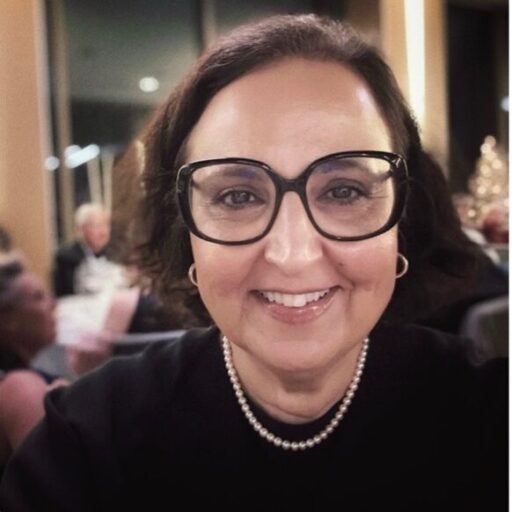
Berna Ozunal
Berna is a Certified Professional Editor (Editors Canada) based in Ottawa, where she works as an editor for a national nonprofit. She has extensive experience across diverse sectors and subjects. She teaches editing at the postsecondary level and contributes to professional education and mentorship initiatives. She chaired and co-chaired the Editors Canada Standards Committee (2020–2024), which led the development of the 2024 update to the Professional Editorial Standards.