Welcome to a new series about arts and art history editing. In this post we’ll meet Emily Doucet and learn about her experience editing art and art history texts.
How did you enter the field of arts/art history editing?
I did a PhD in art history and have published art criticism over the years. In 2021, I started providing freelance editorial support for arts publications and artists in my network. My first projects were editing art criticism and experimental essays for a digital arts journal. I loved teasing out the ideas draft over draft and working with smart, creative people. Eventually, I completed professional training in developmental editing for academic authors and have since built out a full-time freelance business.
How do you find clients?
With my academic background in art history and media studies, I was initially able to rely on my professional network to find clients and get referrals. I also made use of networking opportunities (such as the Academic Editing Special Interest Group (SIG) co-hosted by Editors Canada and the Editorial Freelancer’s Association) to meet other editors — another excellent referral source. Likewise, while I don’t find social media to be a particularly useful place to meet clients, I have found it a useful way to learn from fellow editors.
The best leads are from word of mouth — many of my clients introduce me to their colleagues and friends who need editorial support. I’ve also taught workshops and courses on academic writing and maintain an active newsletter list where I share resources and insights from my work.
What are some common challenges writers have in this industry?
Writers in academia are under incredible pressure, working in difficult, often precarious labour situations and in increasingly charged political climates. On top of this, they’re required to produce writing — creative, intellectual work — to keep their jobs. I see my job as being a collaborative thinking partner, able to help authors navigate both the intellectual work of producing a manuscript and the professional oddities of academic publishing.
What was your most memorable project?
I can’t discuss many of my client projects for confidentiality reasons but one that was particularly memorable is the designer and writer Kelli Anderson’s Alphabet in Motion. The book uses historical essays and pop-ups (!) to demonstrate principles and phenomena in the history of typography. It was the first time I was presented with considering the placement of pop-ups in the structure of a text! The resulting book is brilliant and wildly entertaining.
What skills, tools or expertise does an editor need to be competitive in this niche?
For the specialization I have — supporting faculty authors pursuing book publication — both advanced graduate education and professional editorial training are highly useful, if not essential. As professional editors know, developmental editing isn’t the same as giving feedback on a colleague’s manuscript or peer-reviewing a manuscript, so training on professional workflows and practices is key.
It may sound obvious, but deep compassion and patience for the internecine processes of intellectual work is also important. If you don’t like rapidly shifting deadlines, convoluted ideas and (potentially) stressed-out people, academic developmental editing probably isn’t for you! The payoff for me, however, is huge. I’m honoured to work with brilliant, creative people who care deeply about thinking and knowledge creation and who are devoted to making the world a more interesting and equitable space.
What trends or developments have you observed lately in writing and publishing about the arts?
Perhaps in response to the growing use of generative AI, I see a growing concern for the politics of creative labour and, in turn, more and more artists and writers devoting themselves to analog practices and to lengthy, experimental modes of creation. On the editorial side, I see publications doubling down on human curation and the editorial care it takes to cultivate smart ideas.
That said, I’m aware I work within a bubble — non-profit university presses and tiny arts publications — and that the trend outside of this is basically the reverse, with devastating consequences for cultural workers.
What book have you enjoyed recently about the arts or creativity?
My most gifted book is Beth Pickens’ brilliant Make Your Art No Matter What. I think it’s essential reading for writers and artists everywhere.
Special thanks to Tanya Mykhaylychenko for curating and coordinating this series.
—
The Editors’ Weekly is the official blog of Editors Canada. Contact us.
Discover more from The Editors' Weekly
Subscribe to get the latest posts sent to your email.
Emily Doucet
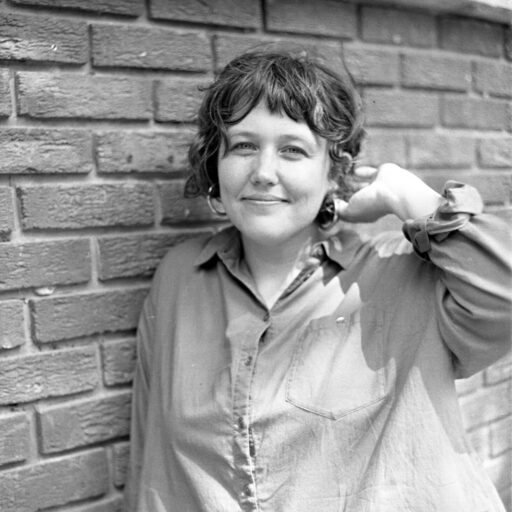
Dr. Emily Doucet is an academic developmental editor, writer, and historian of photography and visual culture. She runs Framing Devices, an editorial consultancy offering support for academic writers in the humanities and social sciences. She holds a PhD in Art History from the University of Toronto. She has published scholarly articles and book chapters, maintains an active practice as an art critic, and has taught at the University of Toronto and McGill University and for community organizations like the London Writers' Salon. Her first book is forthcoming from Duke University Press. She lives and works in Tiohtià:ke/Montréal. You can sign up for her newsletter here: Newsletter