
While there are many different ways to be a writer, writing tends to be understood and represented as a solitary practice. Many writers and non-writers alike have cultivated mental images of the archetypal writer typing away late into the night or in the early morning in an isolated cabin in the middle of the woods.
Far be it from me as a writer/editor to downplay the ways in which the writing process can feel solitary, but I firmly believe that aspects of it can be best understood through a relational lens. While they are engaged in their practice, each writer navigates several different levels of relationship: with themself and their process, with the project and its needs, with other existing works (genre and canon) and with the world more broadly (readers, editors and maybe even publishers). This means that, as editors, showing up for our writers in collaborative and relational ways can be a really supportive practice. Here are a few ways to begin that process.
Curiosity over perfectionism
As a recovering perfectionist, curiosity is something I consciously and continuously cultivate. Perfectionism shuts down and restricts creativity, while curiosity expands it. Though I still sometimes instinctively approach both my writing and my editing with quick judgments, a great deal of practice has taught me that keeping an open mind and asking questions without expectation really widens my view. This, in turn, improves my editorial feedback. It also invites the kind of playfulness that editing and writing mindsets model at their best, a playfulness that creates space for learning and growing. Even though editing is precise and granular, there’s no reason why we can’t craft a more lighthearted approach! We enrich our authors’ curiosity and creativity by asking open questions.
Care and integrity
When moving with care and integrity, it’s important to ask: What assumptions might you be bringing to this edit, particularly if the writer comes from a background outside of your own lived experience? If, for instance, you are a heterosexual cisgender woman and your client is a bi trans man writing a memoir, what are the unspoken expectations that you’re bringing to your edit? Perhaps you assume that he will be writing about his transition and/or his sexuality in a certain way or adhering to a specific coming out narrative. Remember that there are as many ways to write about these experiences as there are queer and trans people going through them. While good intentions go a long way, remember that intention is not equivalent to impact and be ready to repair if and when you cause harm. And, at the same time, care and integrity may sometimes mean referring the client to someone with more expertise, particularly when the manuscript is primarily about experiences you do not share.
Clear scope and boundaries
In the vulnerable editing process, emotions come up and writers have to hold discomfort. Unless you are also a trained therapist, remember that your role isn’t therapy. Without setting boundaries and describing your scope, it can be easy to slip into therapeutic territory, particularly if you also offer writing coaching. For example, if a client tells you they’re experiencing writer’s block, your goal should not be to figure out what is behind the block, psychologically speaking, but rather to work with the client to come up with actionable strategies that get them writing again. Always be clear and intentional around what you can and can’t offer, and focus on what’s actually possible for you to change.
On the whole, don’t be afraid to come to your editing practice with questions instead of answers, empathy without preconceptions and support from within your expertise. An editorial approach that makes space for vulnerability across multiple levels of relationship is one in which your clients can ultimately explore, improve and feel seen.
___
The Editors’ Weekly is the official blog of Editors Canada. Contact us.
Discover more from The Editors' Weekly
Subscribe to get the latest posts sent to your email.
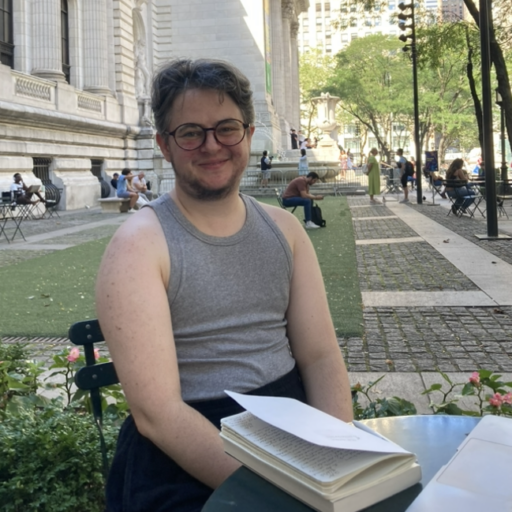
Elliott Silverstein
Elliott teaches writing and other creative processes as practices of being in deep relationship with yourself, your influences and the spirit of the work. He is a former PhD candidate at Stony Brook University, where he received his MA in Cultural Studies, along with a certificate in Women’s, Gender and Sexuality Studies. He lives on Mohican and Schaghticoke land in the Hudson Valley in New York and is currently in the process of completing the Certificate in Developmental Editing of Fiction program with Club Ed.